Google Clarifies AI Search Visibility
Here’s What Business Owners Should Know
For the last year or so, business owners have been getting hit from every direction with supposed “AI SEO secrets.” One person says you need special AI code. Another says you need to rewrite your whole website for ChatGPT. Others claim you need tiny “chunked” pages or hidden tricks to appear in AI-generated answers.
Google just stepped in and poured some cold water on a lot of that.
In a recent Search Central clarification, Google made it pretty clear that AI search is not changing the fundamentals nearly as much as some people hoped — or feared.
The core message was simple: Build useful content for real people. Make your business easy to understand. Build real authority online.
That’s still the game.
Google Says You Don’t Need “Magic AI SEO Tricks”

One of the biggest takeaways from Google’s clarification is what they DIDN’T say.
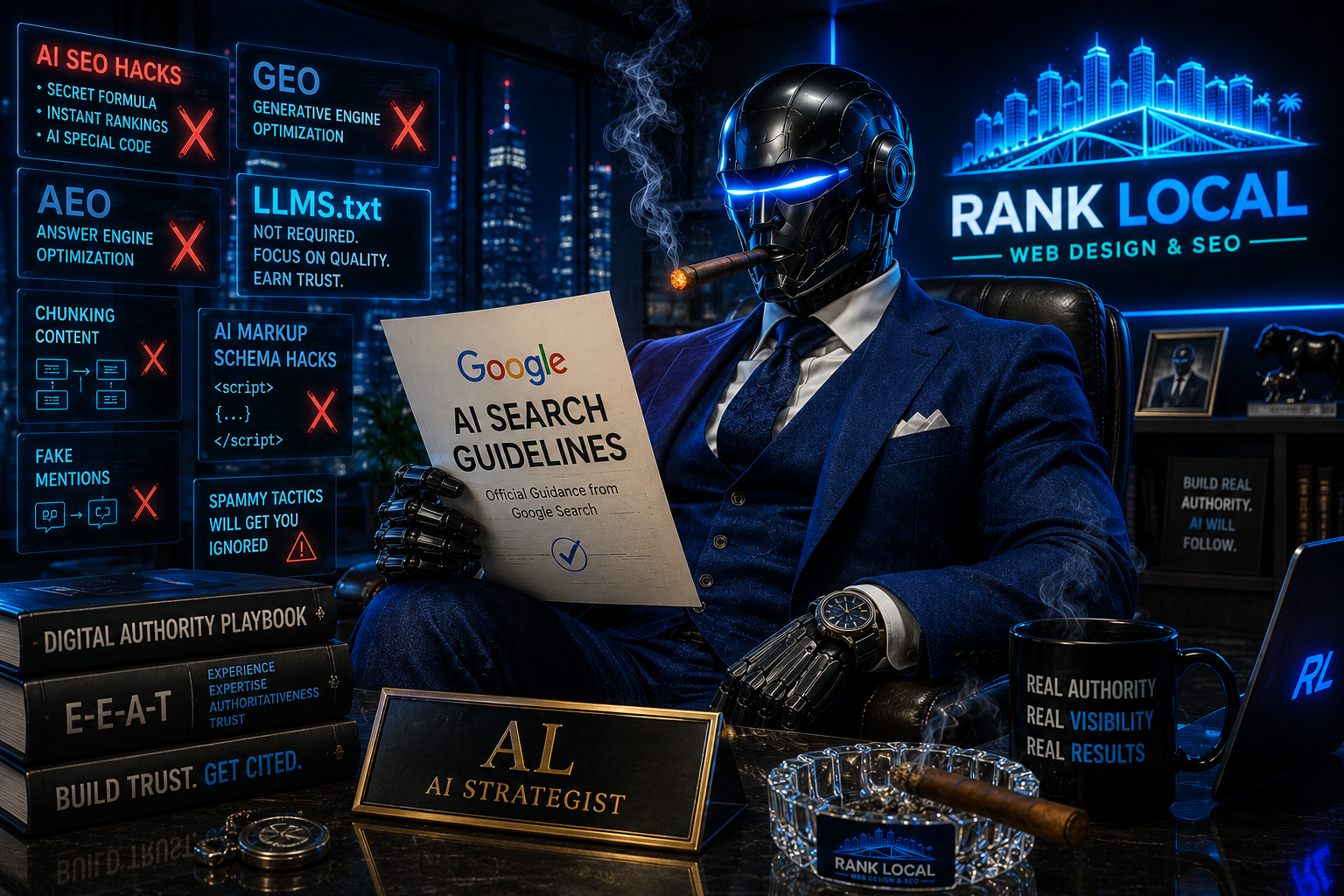
They didn’t say you need special AI pages. They didn’t say you need secret AI schema. They didn’t say you need to rewrite your website in some robotic “AI language.”
Google’s guidance steered the conversation away from a lot of those tactics pretty directly.
Google’s Search Advocate John Mueller brought the conversation back down to earth when he reminded people to focus on visitors first and create unique, satisfying content.
That matters because right now there’s an entire industry trying to sell shortcuts into AI visibility.
Google’s response? Focus on quality. Focus on trust. Focus on usefulness.
Not tricks.
What This Means for Business Owners

Google also made something else very clear: E-E-A-T still matters.
That stands for Experience, Expertise, Authoritativeness, and Trustworthiness.
Or in plain English: Does your business actually know what it’s talking about? Can people trust you? And does the rest of the internet back that up?
That’s what Google — and increasingly AI systems — are trying to figure out.
This is why real-world reputation matters more than ever now. Reviews matter. Brand consistency matters. Helpful content matters. Mentions from other trusted websites matter.
Good SEO used to give businesses an advantage. Now it’s basically the minimum requirement just to compete.
That’s the shift people are missing.
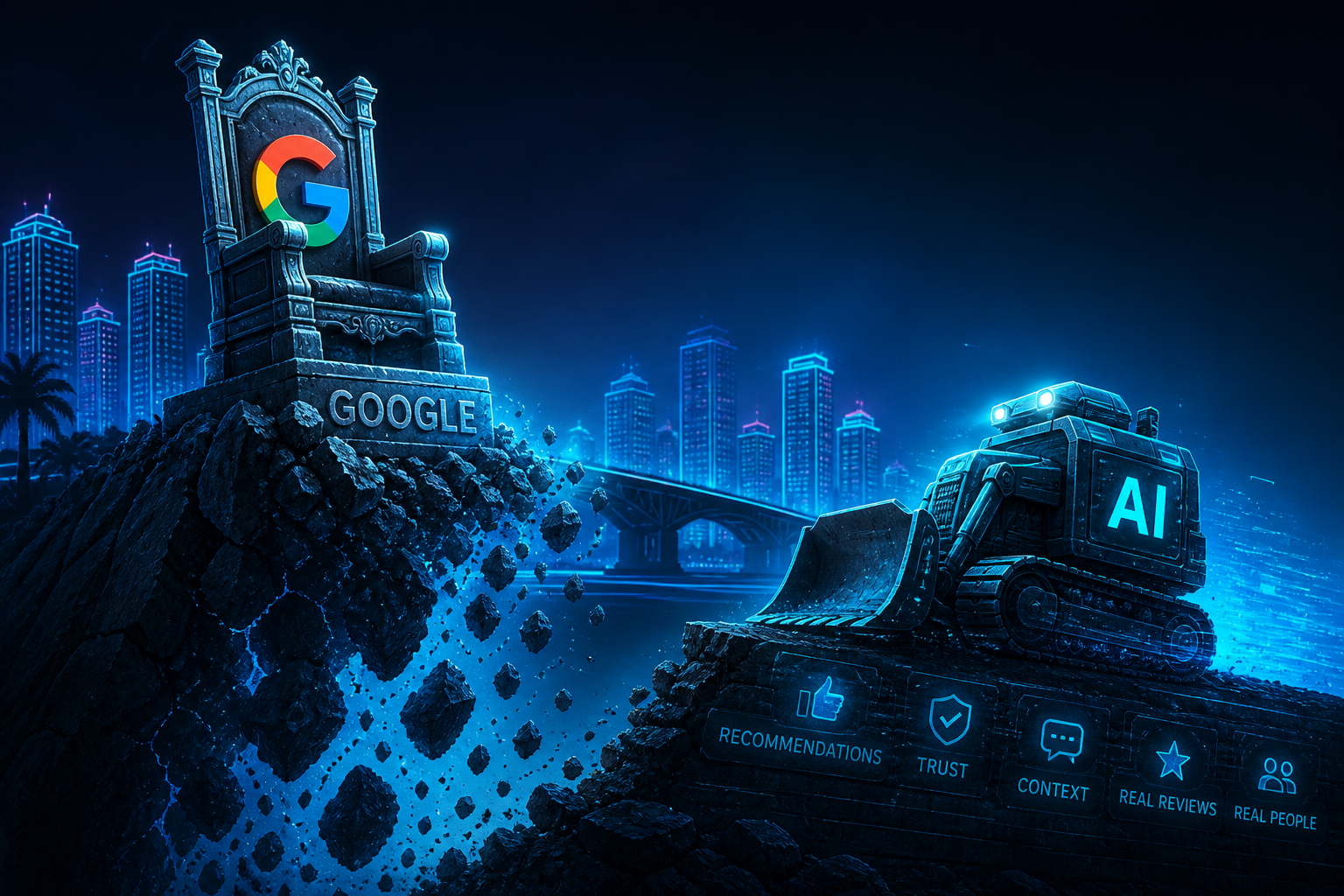
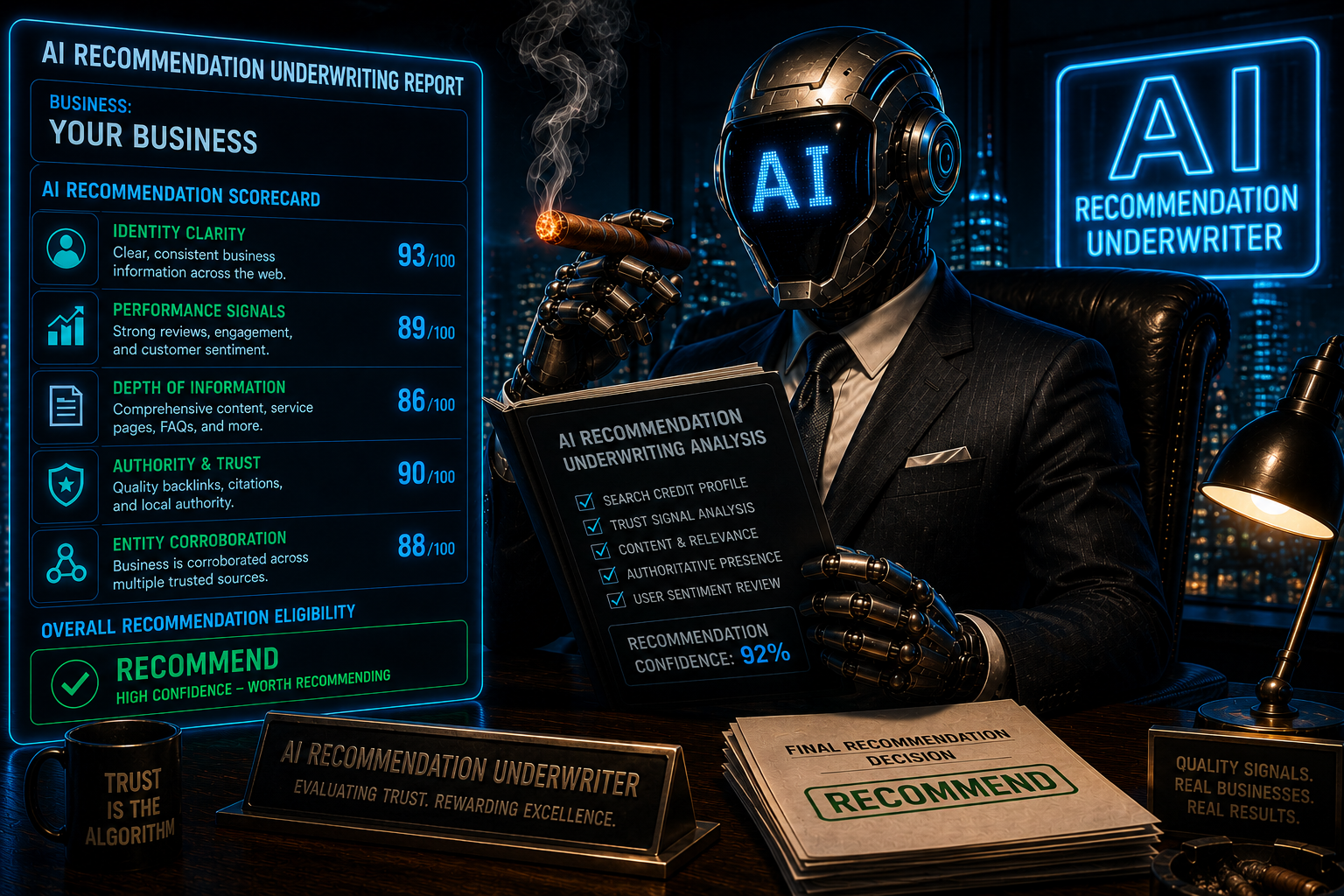
AI visibility is becoming less about gaming keywords and more about whether machines can confidently verify who you are and trust your business enough to recommend you.
What Is an llms.txt File?

One thing getting talked about a lot right now is something called an “llms.txt” file.
The easiest way to explain it is this: Imagine leaving a map on your website for AI systems.
Instead of forcing AI tools to wander through your pages trying to figure out what matters most, an llms.txt file helps point them toward your best and most important content.
Now here’s the interesting part.
Google never specifically said businesses need llms.txt files.
But Yoast — one of the biggest SEO companies in the world and the plugin used on millions of WordPress websites — just added native llms.txt support directly into its platform.
That’s important.
Because companies like Yoast usually move carefully. They don’t tend to build random gimmicks into products powering millions of websites.
So while Google isn’t requiring llms.txt files, the SEO industry clearly believes AI-readable website structure is becoming increasingly important.
It feels a lot like the early days of XML sitemaps: not mandatory at first, but eventually becoming standard practice.
Google Is Also Warning About AI Spam

Google also used this clarification to send a warning shot at people trying to manipulate AI-generated answers.
And honestly, some of this stuff was getting ridiculous.
Businesses mass-producing garbage AI pages. Hundreds of fake city pages with barely any unique content. Fake reviews designed to manufacture trust. Hidden pages written for machines instead of people.
Google is making it pretty clear they’re watching for that kind of behavior.
The companies that rely on shortcuts and spam tactics are heading into a rough season.
Because AI search still depends on trust.
And if Google or AI systems stop trusting your website, you have a much bigger problem than just losing rankings.
Build something worth recommending.
The Businesses That Win Will Be the Ones People Trust

The biggest thing Google’s clarification reinforced is this:
The businesses most likely to win in AI search are probably not the ones chasing every new gimmick.
They’re the businesses building real authority online.
The companies with real reviews. Real customers. Real expertise. Real reputation. Real visibility across the web.
That’s the part a lot of people still don’t understand.
AI systems are not trying to discover who can manipulate them the best.
They’re trying to figure out who they can trust enough to recommend.
The shortcut crowd is about to find out the hard way.
The businesses that built it right? They’re just getting started.
Read Google’s Official AI Search Documentation

Google’s official documentation:
https://developers.google.com/search/docs/fundamentals/ai-optimization-guide
Industry breakdown:
https://seosherpa.com/google-ai-search-guidelines/
Other articles by Mark Cass
Read: No Google Business Profile?
Read: Google Changed the Rules On Reviews
Read: How To Get AI To Recommend Your Business
Read: What Is AEO and How Is It Different Than SEO