
How Do I Get My Business Found in AI Search Engines?
To get your business found in AI search engines, make your business identity consistent across the internet, create detailed pages that answer real customer questions, strengthen your reviews and third-party profiles, publish evidence of genuine experience, and connect all of those signals through clear website structure and internal links. Then test what AI platforms know about your company and correct any missing, outdated, or conflicting information.
Practical Steps to Help ChatGPT, Gemini, Perplexity, and Google Understand and Recommend Your Business

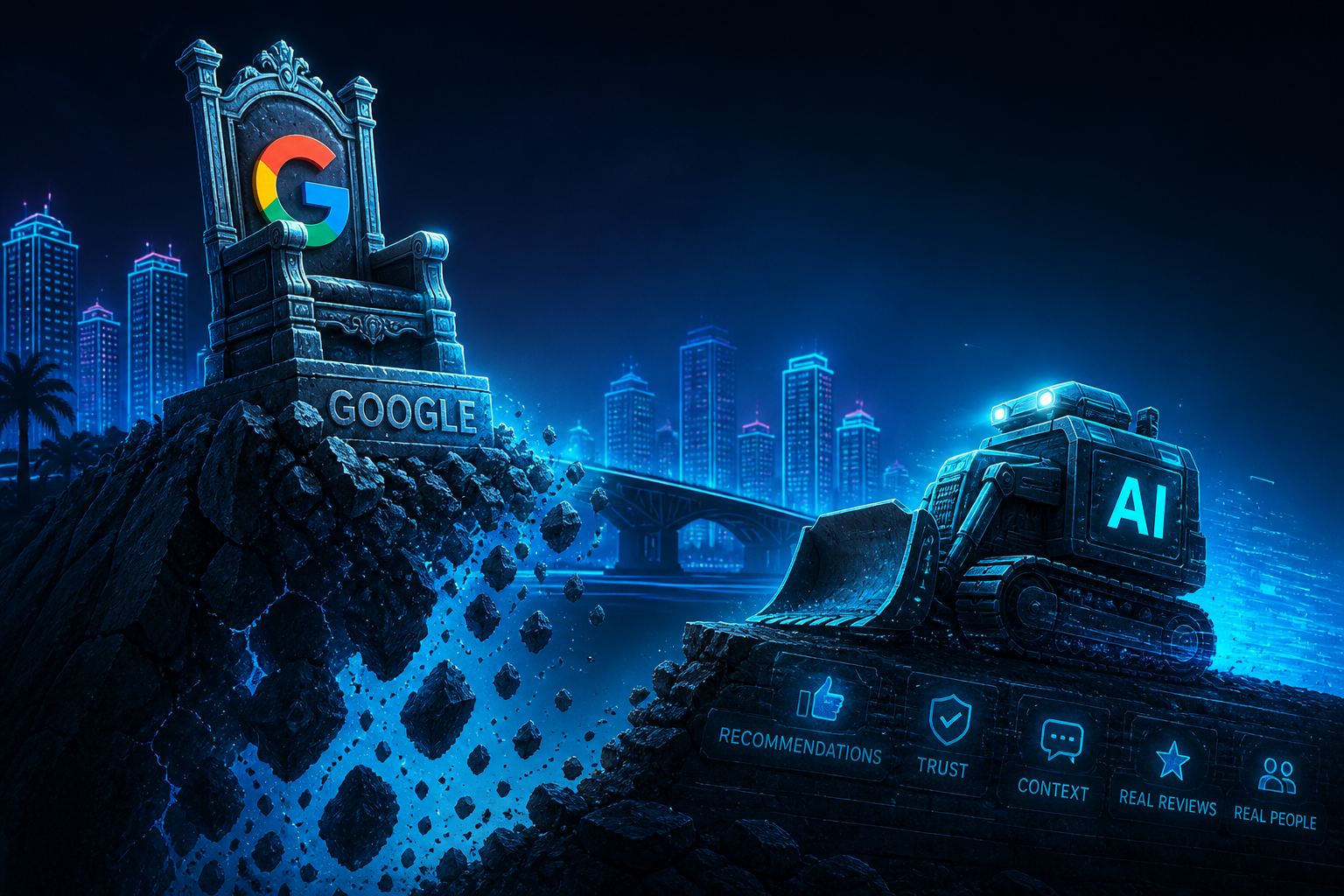
Your business may rank well on Google and still be nearly invisible in AI search.
A potential customer can ask ChatGPT, Gemini, Perplexity, or Google’s AI-powered search tools for a recommendation and receive a list of your competitors—even when your company has a good website, strong reviews, and years of experience.
That happens because traditional rankings are only one part of AI visibility.
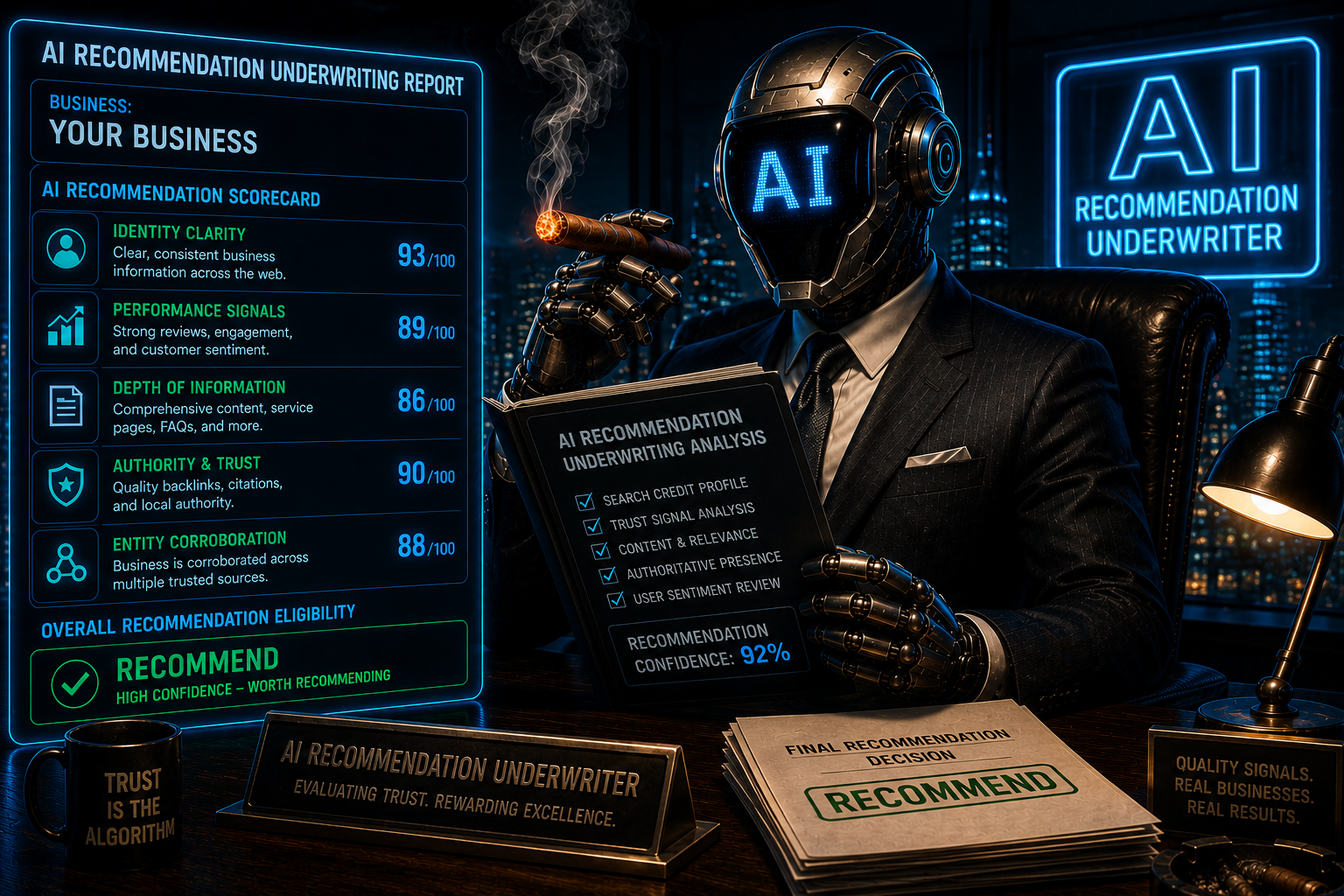
AI systems try to determine who your business is, what it does, where it operates, whether the information is reliable, and whether enough independent evidence exists to justify including it in an answer.
Understand What “Found in AI Search” Means

Being found in AI search can mean several different things.
An AI platform may:
- Recognize that your business exists
- Accurately explain what you do
- Cite your website or an article
- Include you in a list of providers
- Compare you with competitors
- Recommend your business directly
Those outcomes are not equal.
An AI system knowing your business name does not mean it understands your services. Citing one of your articles does not automatically mean it trusts your company enough to recommend it.
The real goal is to become visible when someone asks a service-based question such as:
Make Your Business Easy to Identify

AI cannot confidently recommend a business it cannot clearly identify.
Start by reviewing how your company appears across:
- Your website
- Google Business Profile
- Bing Places
- Apple Business Connect
- Yelp
- Better Business Bureau
- Facebook and LinkedIn
- Chambers and professional directories
- Industry and local business listings
Your business name, phone number, website, location, service area, hours, ownership, and primary services should all describe the same real company. The wording does not have to be identical everywhere, but the underlying facts should agree. Your website should also make your identity unmistakable.
Your homepage should clearly state:
- What the business does
- Where it operates
- Who it serves
- What makes it different
- How a customer can contact you
Your About page should identify the people behind the company and explain their experience.
Your contact page should contain current, usable information.
Structured data can further clarify the relationships between your business, services, authors, articles, locations, and profiles. Rank Local uses its primary Local Business schema within the sitewide header, with page-specific schema added where appropriate.
Schema helps machines interpret your information. It does not replace accurate content or genuine authority.
Build Pages That Answer Real Customer Questions

One thin page listing every service is usually not enough.
Each important service should have its own useful page explaining:
- What the service is
- Who needs it
- What problem it solves
- Where it is available
- What the process involves
- What affects the cost
- How long it may take
- What the customer should expect
- Why the company is qualified to provide it
The main answer should appear near the top of the page.
Do not bury useful information beneath several paragraphs of slogans, generic promises, or sales language.
A page about emergency plumbing should quickly explain whether emergency service is available, what problems are handled, where service is offered, and how to request help.
Use descriptive headings to organize the information clearly. Add genuine FAQs, original photos, examples, pricing factors, and relevant internal links.
Supporting blog articles should connect back to the service pages they support. Service pages should link to related articles, case studies, FAQs, and location resources.
This creates a connected library of information rather than a collection of isolated pages.
For more on website structure and content failures, read How to Build a Website That Fails.
Build Independent Proof
Beyond Your Website

Your website tells AI what you say about your business.
Independent sources help prove it.
That outside evidence may come from:
- Google Business Profile
- Bing Places
- Apple Business Connect
- Yelp
- Better Business Bureau
- Professional organizations
- Chambers of Commerce
- Licensing databases
- Industry directories
- Local publications
- Interviews
- Guest articles
- Community organizations
- Social platforms
- YouTube
The goal is not to create hundreds of low-quality directory listings.
Focus on sources that are legitimate, relevant, maintained, and likely to be trusted by real customers.
Independent profiles should confirm the same basic facts found on your website. They can also provide reviews, business history, credentials, photographs, community involvement, and other evidence AI systems may use.
Do not depend entirely on Google.
Google remains essential, but other AI platforms may rely on different combinations of sources. A broader footprint also protects your visibility if a Google Business Profile is suspended, edited incorrectly, or temporarily unavailable.
Read No Google Business Profile? Your Business Can Still Be Found for more on building visibility beyond one platform.
Strengthen Reviews,
Experience, and Authority

Reviews provide independent descriptions of real customer experiences.
They may help establish:
- What services you perform
- How customers were treated
- Whether the company communicates well
- Whether problems were resolved
- Whether the business is active
- Whether customers trust the company
Ask customers for honest feedback, but do not tell them what to write.
Do not provide keywords, city names, service phrases, or a prewritten review for the customer to copy. Detailed reviews are useful only when they reflect the customer’s genuine experience.
Your own content should also prove experience rather than merely claiming it.
Useful evidence includes:
- Original project photographs
- Before-and-after examples
- Case studies
- Videos
- Customer outcomes
- Documented processes
- Credentials
- Licenses and certifications
- Awards and memberships
- Interviews and publications
- A clear author biography
An experienced professional should be able to explain details a generic content writer cannot.
Identify who wrote important articles, why that person is qualified, and how they are connected to the company.
AI systems are more likely to trust a business when the website, author, reviews, credentials, profiles, and independent sources all support the same story.
Read Google Changed the Rules on Reviews before changing your review-request process.
Test What AI Knows
About Your Business

Do not assume your online presence is clear. Test it. Ask several AI platforms questions such as:
- What is [exact business name]?
- Who owns the company?
- What services does it provide?
- Where does it operate?
- Is it a trustworthy business?
- What sources support that answer?
- Recommend companies providing [service] in [location].
- Why were those companies selected?
- What information about my business could not be verified?
Run the tests across ChatGPT, Gemini, Perplexity, Microsoft Copilot, and Google’s AI search features.
The answers may differ based on the platform, wording, location, available search access, and sources used. Record:
- Incorrect information
- Missing services
- Missing locations
- Outdated details
- Competitors recommended
- Sources cited
- Information the AI could not verify
Then correct the underlying sources.
Do not focus only on why an AI answer was wrong. Ask what evidence your competitors have that you do not.
They may have stronger service pages, more detailed reviews, better third-party profiles, clearer author information, recent project evidence, local press coverage, or more complete business information.
The objective is not to copy them. It is to remove uncertainty surrounding your own business.
The Core Principle
Getting found in AI search is not about discovering one secret prompt, installing one plugin, or publishing hundreds of AI-generated articles.
It is about creating enough clear, connected, and independently verifiable evidence that AI systems do not have to guess:
- Who you are
- What you do
- Where you operate
- Whether you are active
- Whether customers trust you
- Whether other credible sources recognize you
Your website makes the claim. Your content explains the claim. Your structure clarifies the claim. Your reviews support the claim. Your experience proves the claim. Independent sources verify the claim. When those signals agree, your business becomes easier for AI systems to understand, cite, compare, and recommend.
Not Sure What AI Can Find
About Your Business?
Rank Local Web Design & SEO evaluates your website, business profiles, search visibility, content, reviews, structured data, and third-party footprint as one connected system.
Our SEO and AI Visibility Audit identifies missing signals, conflicting information, weak content, authority gaps, and competitors receiving recommendations you may be missing.
Book Your SEO and AI Visibility Audit
Frequently Asked Questions
How long does it take to get found in AI search?
There is no guaranteed timeline. Improvements may appear after search engines and AI platforms recrawl your website and supporting profiles. Businesses with an established online presence may see changes faster than companies starting with weak or conflicting information.
Do I need special AI schema on my website?
There is no single required “AI schema.” Use accurate structured data that describes your real business, services, articles, authors, locations, and website relationships. Schema improves clarity, but it does not create trust by itself.
Does an llms.txt file help with AI visibility?
An llms (dot) txt file may help organize information for systems that choose to use it, but it does not force AI platforms to crawl, cite, or recommend a business. It should be treated as a supporting tool, not a complete strategy.
Can my business appear in AI search without a Google Business Profile?
Yes. AI platforms may use websites, Bing, Apple, Yelp, BBB, directories, reviews, publications, social profiles, and other sources. A strong Google Business Profile is valuable, but it is not the only path to AI visibility.
How do I measure whether my AI visibility is improving?
Track branded searches, AI referral traffic, calls, form submissions, mentions, citations, and customers who say they found you through an AI platform. Repeat the same test questions periodically and document changes in accuracy, sources, comparisons, and recommendations.
Would You Like Us To Audit Your Website
For Areas of Visibility Improvement?

Other Related articles by Mark Cass
Read: Google Just Changed The Rules To Online Search
Read: Google Clarifies AI Search Visibility
Read: Google Changed the Rules On Reviews
Read: How To Get AI To Recommend Your Business
Read: What Is AEO and How Is It Different Than SEO
Read: The Insider Guide to Fixing Unverified or Suspended Google Business Profiles